
For years, Nvidia has held an iron grip on the AI chip market, turning its GPUs into the default hardware for training and running large language models. That dominance has created a wave of startups trying to carve out a place in the market. Few have attracted as much attention as Etched. The two-year-old startup announced Thursday that it has raised $300 million in a Series C funding round, pushing its valuation to $10.3 billion as it works to build AI chips built for the next phase of artificial intelligence.
The financing was led by Sequoia Capital, with participation from Andreessen Horowitz, Jane Street, Diffusion, Argo, and SK Hynix. According to the company, the round marks the highest valuation ever achieved by a Sequoia-led Series C investment.
“We’ve raised $300M at a $10.3B valuation, led by Sequoia Capital alongside Andreessen Horowitz, Jane Street, Diffusion, Argo, and SK Hynix. We’re grateful for their support on our journey to Gigawatt-scale,” the company said in a blog post.
The announcement arrives two years after Etched secured $120 million in funding to pursue an ambitious goal that many in the semiconductor industry have viewed as one of the hardest challenges in technology: building chips capable of competing with Nvidia in AI infrastructure.
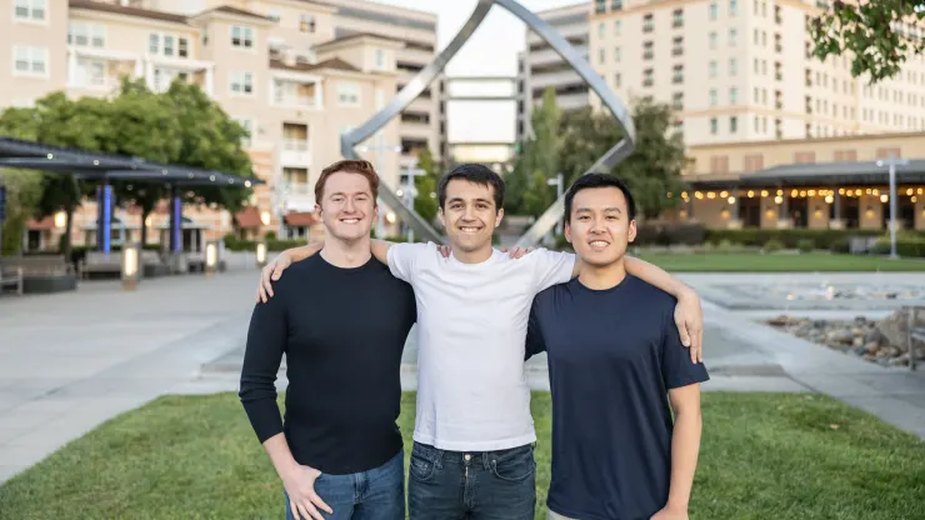
Founded in 2022 by Harvard dropouts Gavin Uberti and Chris Zhu, Etched has taken a different approach from many AI chip companies. Instead of building general-purpose GPUs, the startup is developing application-specific hardware built around transformer models, the neural network architecture that powers systems such as ChatGPT, Claude, Gemini, and many of today’s leading AI models.
Its first processor, called Sohu, is built to accelerate AI inference, the stage where trained models generate responses for users. Inference has become one of the hottest segments in AI infrastructure as companies race to lower costs and deliver faster performance for production workloads. Industry analysts expect inference spending to grow sharply over the next several years as enterprises move AI applications from experimentation into everyday use.
Etched believes purpose-built chips can outperform traditional GPUs for transformer inference by removing hardware features that are unnecessary for modern AI models. If that approach delivers the gains the company expects, it could give cloud providers and AI developers another option in a market where Nvidia has enjoyed years of overwhelming demand.
Sohu, the world’s first transformer ASIC
Manufacturing those chips requires one of the industry’s most expensive steps. Etched has partnered with Taiwan Semiconductor Manufacturing Co. to fabricate Sohu, a process that demands significant capital before the first commercial chip reaches customers. Chief Executive Officer Gavin Uberti has previously said early funding was needed to cover the cost of taping out the chip at TSMC.
The latest financing will help move the company from design into large-scale deployment.
Etched said it has already “kicked off fabrication of hundreds of millions of dollars worth of inference clusters. We’ve built a new 10-Megawatt lab fifteen minutes from our office to enable continuous deployment of our first-gen hardware and rapid prototyping of future generations.”
The company recently opened an 80,000-square-foot facility near its headquarters in San Jose, California, where it plans to increase production capacity and accelerate hardware development. Etched said customer demand for its inference systems continues to exceed available supply as pilot projects turn into production deployments.
The startup has grown far beyond its early days. Etched now says it employs about 400 people and plans to continue hiring as production ramps up.
The race to loosen Nvidia’s grip on AI infrastructure
Etched joins a growing list of startups trying to loosen Nvidia’s hold on AI computing. Companies across the industry are betting that inference will become the next major battleground as AI services scale to billions of daily requests.
The challenge remains steep. Nvidia has built an ecosystem that stretches far beyond silicon, combining hardware, networking, software, and developer tools that have become deeply embedded across cloud providers and enterprise AI platforms. Breaking into that market requires more than building a faster chip. New entrants must convince customers to rewrite workflows, validate new hardware, and trust an alternative supplier for mission-critical AI infrastructure.
Etched believes the economics of inference create an opening. As organizations spend billions serving AI models instead of training them, specialized hardware could become more attractive if it delivers meaningful improvements in speed, efficiency, or operating costs.
A $10.3 billion valuation signals that some of Silicon Valley’s biggest investors believe that opportunity is large enough to justify the bet. The next challenge is turning that confidence into commercial adoption in one of technology’s most competitive markets.
Etched Founders