
AI agents can write emails, summarize meetings, and generate code. Running an entire company is a much bigger challenge. A new startup called Skyfall believes today’s large language models will never get there on their own.
Skyfall, an AI startup founded by the team behind Maluuba, the deep learning lab Microsoft acquired in 2017, has emerged from stealth with backing from Fidelity, Inovia Capital, Touring Capital, M13, NextView Ventures, and Garage Capital. The company did not disclose how much it raised.
The founders are aiming far beyond another enterprise chatbot. Their goal is to build what they call the world’s first autonomous enterprise, an AI system capable of making long-term business decisions across finance, operations, marketing, and human resources with minimal human involvement.
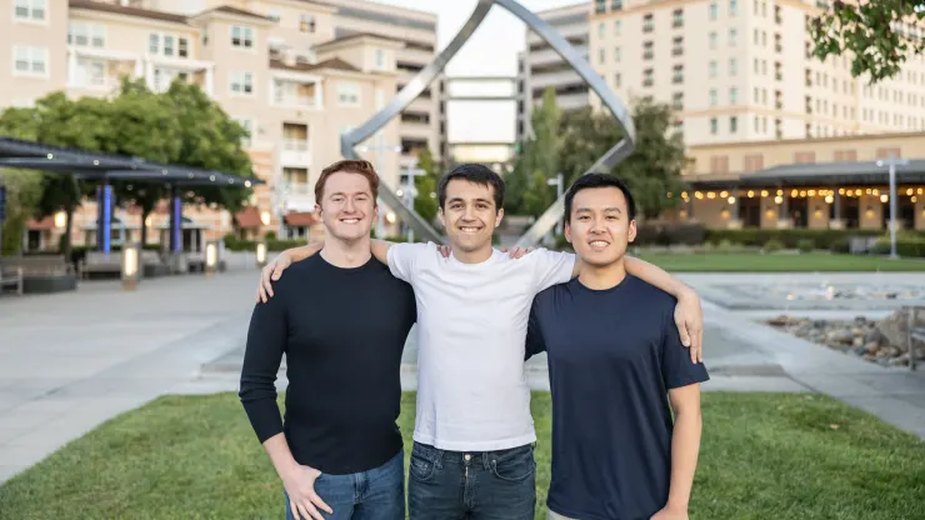
The company is led by Sam Pasupalak, Kaheer Suleman, and Sumit Pasupalak. After Microsoft acquired Maluuba for a reported $160 million, the team helped build Microsoft’s AI efforts in Canada. Skyfall is headquartered in San Francisco and operates a research hub in Toronto.
Inside Skyfall’s Plan to Build an Autonomous Enterprise
Instead of relying on conventional large language models, Skyfall is building what it calls Enterprise World Models. The idea is to move beyond predicting the next word and build AI that predicts the future state of a business by simulating thousands of possible decisions and their downstream effects.
Current AI systems are good at generating text, writing code, and answering questions. Skyfall argues those capabilities fall short when the task involves running a business over months or years. Executives constantly balance competing priorities across hiring, pricing, sales, operations, customer support, and cash flow. A decision in one area often creates ripple effects across the entire organization.
Skyfall believes that kind of reasoning requires AI systems that continuously model how a company changes over time instead of simply responding to prompts.
“We invested in Skyfall because Sam has a track record of seeing the next frontier before it becomes consensus. He recognized that LLMs would not be continual learners, so he built a research lab around a new world model architecture designed for true enterprise intelligence in ever evolving reality,” said Morgan Blumberg, Partner at M13. “Morpheus gives the industry its first real test of whether AI can reason through the complexity of a living business, not a simulation that resets every few minutes.”
The company’s long-term vision is ambitious. Skyfall wants AI to simulate thousands of possible business strategies before recommending a course of action, much like executives weighing multiple scenarios before making major decisions.
“The job of a CEO is to make hundreds of decisions every week with thousands of data points available to you,” said Sam Pasupalak, Co-founder of Skyfall. “To automate that, you need more than a chatbot; you need a comprehensive system that understands the fundamentals of a company: how marketing spend impacts sales, how HR shifts affect productivity, and how to plan across long horizons. It is a herculean effort, but one that will soon be possible with breakthroughs in AI, and we hope to be the ones to make this a reality.”
Skyfall AI Launches With Backing From Fidelity to Build the First Autonomous Enterprise
To test those ideas outside the lab, Skyfall plans to buy a small SaaS company for up to $1 million. The acquisition will serve as a live experiment to see whether AI can operate and grow a real business with minimal human oversight.
The company says people will handle only the legal and regulatory requirements, including signing acquisition documents, setting up banking and payment systems, and filing taxes. Skyfall wants its AI to manage the day-to-day operation of the business and double revenue within six months. It plans to publish updates throughout the experiment, including lessons learned and failure cases.
The startup has already introduced its first research platform, Morpheus, a continual reinforcement learning system built for AI researchers. Unlike many existing training environments that frequently reset simulations, Morpheus keeps enterprise environments persistent so AI agents experience the long-term consequences of their decisions. Skyfall says the same platform is already being used internally to train its own models.
Over the coming months, the company plans to introduce a suite of AI agents focused on automating tasks for CEOs and business operators.
Skyfall has assembled a team of 25 researchers and engineers from Microsoft AI, the University of Toronto, the University of Waterloo, the University of Alberta, and Mila Quebec AI Institute. The founders are betting that enterprise AI will require a different path than today’s generation of language models.
“Our relationship with the Skyfall founders goes back to the Maluuba days. We have always admired their grit to take on hard problems in AI with a goal of real commercial value,” said Samir Kumar, General Partner at Touring Capital. “Skyfall.ai is pushing R&D in world models and showing how to build AI that understands and can simulate highly complex, dynamic systems. They have set an incredibly ambitious vision for the future of enterprise software and building digital twins of companies and their processes. Touring Capital is thrilled to partner with this team as they undertake the foundational technical work required to unlock this next frontier.”
Skyfall enters a crowded enterprise AI market where nearly every startup promises to automate office work. Its approach stands apart for one reason. Instead of building another assistant that helps employees do their jobs, the company wants AI to become the operator itself. If that experiment succeeds, it could redefine what running a business looks like.