
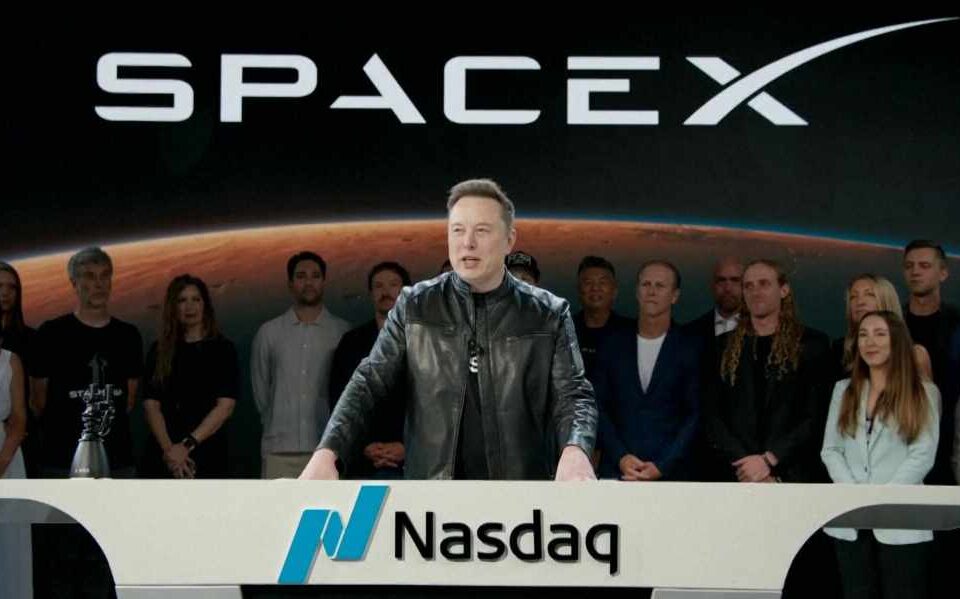
The stock has fallen from a post-IPO high of $225.64 to around its $135 offering price, wiping out roughly $1 trillion in market value as investors reassess the company’s heavy spending on Starship and Starlink.
The market’s excitement over SpaceX’s public debut is fading fast.
Just weeks after joining the Nasdaq-100, Elon Musk’s space and satellite company has given up nearly 40% of its value from its post-IPO high, wiping out roughly $1 trillion in market capitalization. The selloff has pushed the stock back to around its $135 IPO price, erasing the rally that followed one of the year’s biggest public offerings.
SpaceX shares fell for a second straight trading session on Monday, extending a slide that began shortly after the company’s addition to the Nasdaq-100. The stock is now trading near its initial public offering price of $135 after reaching an intraday high of $225.64 following its June debut.
“Shares of SpaceX slipped for a second trading day on Monday, bringing Elon Musk’s company closer to its $135 initial public offering price just days after making its entrance into the Nasdaq-100,” CNBC reported.
SpaceX Loses $1 Trillion in Value as Shares Sink 40% From Post-IPO Peak
The retreat marks a sharp reversal for a company that briefly became one of the world’s most valuable publicly traded companies. At its peak, SpaceX commanded a market capitalization of roughly $2.9 trillion. At current levels, investors have erased about $1 trillion from that valuation.
The latest decline came just days after SpaceX officially joined the Nasdaq-100, a move that triggered mandatory buying by index funds and exchange-traded funds tracking the benchmark. The inclusion followed a recent rule change that allows newly public companies to enter the index much sooner than in the past, making SpaceX eligible within weeks of its market debut.
That influx of passive buying initially provided fresh demand for the stock. The momentum did not last.
SpaceX shares are now down more than 40% from their post-IPO peak of $225.64. The stock has slipped below its first-day opening price of $150 and is now trading near its $135 IPO price.
The stock has since rebounded modestly and was trading at $138.60 at the time of writing, though it remains down roughly 39% from its post-IPO high of $225.64.
Investors appear to be shifting their focus away from the excitement surrounding the listing and back to the company’s financial profile. Unlike software companies that can scale with relatively modest investment, SpaceX faces enormous ongoing spending requirements to build rockets, manufacture satellites, expand launch capacity, and grow its global Starlink network.
“Much of the selling pressure stemmed from a sober reassessment of the company’s business model, which features heavy capital expenditures (capex) required to increase Starship production and Starlink deployments.”
That reality has become harder to ignore as the initial enthusiasm surrounding the IPO fades. Public markets often reward growth, yet they can turn quickly when investors begin weighing future cash needs against expected returns.
The pullback does not erase SpaceX’s position as a leader in commercial spaceflight or satellite internet. Starlink continues to add customers worldwide, and Starship remains central to the company’s long-term ambitions for deep-space transportation. The latest move, though, suggests investors are placing greater weight on execution, spending discipline, and the time it will take for those investments to translate into sustained financial returns.
For now, SpaceX’s stock is trading close to where its public market journey began, a striking reversal for a company that briefly added nearly $1 trillion in market value after its debut.