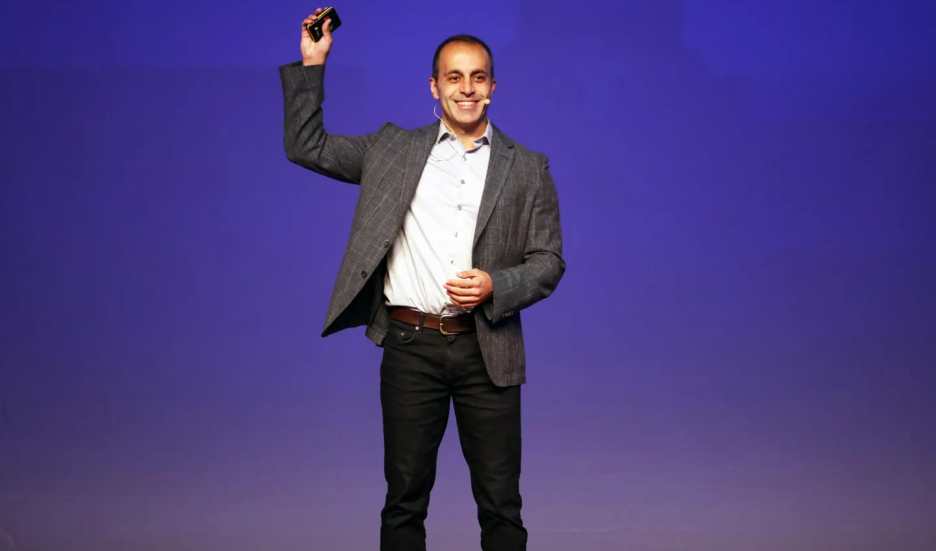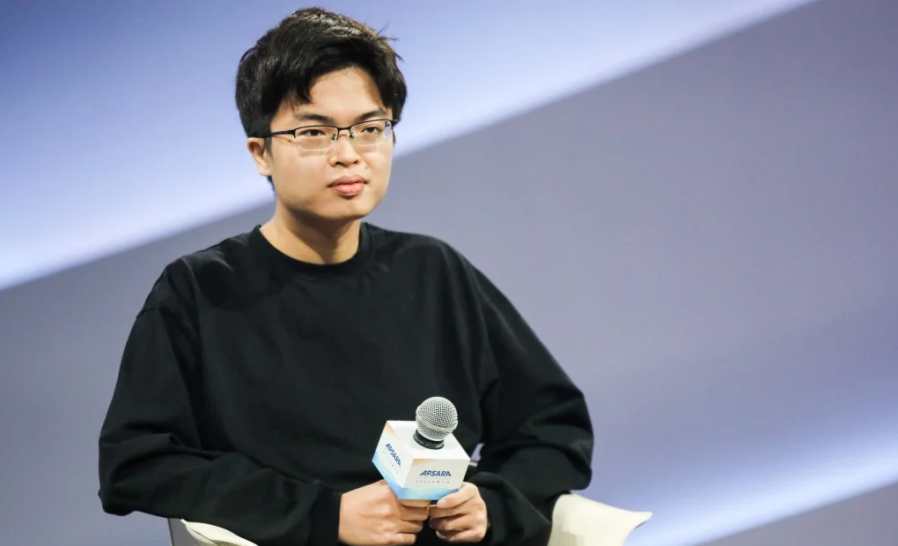

OpenAI and Anthropic are once again competing for the top spot in enterprise AI, with both companies unveiling their most advanced models within weeks of each other.
On June 10, Anthropic introduced Claude Fable 5, bringing its once-restricted Mythos-class AI to a broader audience just months ahead of its planned IPO. The company said Fable 5 is built on the same capability tier as Mythos, the system that drew attention across Silicon Valley and Washington earlier this year for its ability to identify software vulnerabilities and complete long-running autonomous tasks.
OpenAI followed on July 9 with GPT-5.6, its newest generation of AI models after a delayed rollout tied to a U.S. government security review. Instead of releasing a single flagship, OpenAI introduced a three-model family. Sol is its most capable model. Terra targets developers and businesses looking for flagship-level performance at a lower price. Luna focuses on speed and affordability for high-volume workloads.
Cybersecurity has become one of the clearest battlegrounds between the two companies. OpenAI says GPT-5.6 Sol delivers its strongest cybersecurity performance yet, particularly on long-horizon vulnerability research and software exploitation tasks. The company says Sol matched Anthropic’s Mythos Preview on ExploitBench using roughly one-third as many output tokens, an efficiency gain that could lower both inference costs and latency.
The competition extends well beyond cybersecurity. OpenAI is betting that lower costs, flexible reasoning controls, and a tiered model lineup will appeal to developers building AI applications at scale. Anthropic is taking a different path by focusing on autonomous software engineering, long-running AI agents, and enterprise reliability.
That leaves one question many developers, founders, and enterprise buyers are asking: Which model is actually better?
The answer depends on far more than benchmark scores.
This comparison examines how GPT-5.6 and Claude Fable 5 stack up across architecture, coding performance, pricing, reasoning, safety, enterprise adoption, and real-world use cases to help you decide which model fits your workload.
GPT-5.6 vs. Claude Fable 5: At a Glance
Category GPT-5.6 Claude Fable 5 Release June 26, 2026 June 10, 2026 Availability Limited preview (rolling out) General availability Model lineup Sol, Terra, Luna Single Mythos-class production model Starting API pricing From $1 input / $6 output (Luna) $10 input / $50 output Primary strength Reasoning efficiency, cybersecurity, and pricing flexibility Autonomous software engineering and long-running AI agents Best suited for Flexible deployments across multiple workloads Sustained autonomous work and complex engineering projectsOpenAI and Anthropic have built two frontier AI systems with different priorities.
GPT-5.6 is a family of models designed to give developers more flexibility. Instead of asking customers to pay flagship prices for every request, OpenAI separates performance into three tiers. Sol delivers the highest level of reasoning and introduces new capabilities such as Max Reasoning and Ultra Mode for complex, multi-step work. Terra offers a lower-cost option that OpenAI says approaches the performance of GPT-5.5 in many production workloads. Luna targets applications where speed, throughput, and cost matter more than maximum intelligence.
Image Credit: OpenAI
Claude Fable 5 follows a different strategy. Rather than introducing multiple performance tiers, Anthropic built a single production model around the capabilities first demonstrated by Mythos. The company says Fable 5 was created for software engineering, research, computer use, and AI agents capable of working independently for hours or even days with minimal human supervision.
Those contrasting philosophies shape almost every comparison that follows.
OpenAI focuses on giving developers more control over performance, reasoning depth, and operating costs.
Anthropic focuses on building AI systems that behave more like experienced teammates capable of planning, verifying their own work, and completing complex projects from start to finish.
Claude Fable 5 (Image credit: Anthropic)
Neither strategy is inherently better.
The right choice depends on what you expect your AI to accomplish.
Different philosophies, different goals
Looking only at benchmark scores misses one of the biggest stories behind these releases.
OpenAI and Anthropic are solving different problems.
GPT-5.6 reflects OpenAI’s belief that frontier AI should become easier to deploy across thousands of production applications. Its three-tier lineup allows companies to match intelligence with budget. A customer can reserve Sol for difficult reasoning tasks, switch to Terra for everyday workloads, and run Luna for high-volume inference without changing platforms.
That approach could translate into meaningful savings for companies processing millions or even billions of tokens each month.
Anthropic has concentrated on a different challenge.
The company wants AI to complete meaningful work with less human supervision.
Instead of measuring success by chatbot conversations alone, Anthropic evaluates whether an AI system can investigate software bugs, migrate large codebases, analyze financial data, conduct research, use software tools, and continue working across extended sessions without losing context.
That distinction helps explain why the two companies often highlight different benchmark results.
OpenAI emphasizes reasoning efficiency, cybersecurity, and developer controls.
Anthropic emphasizes autonomous software engineering, long-duration agent performance, and enterprise deployments.
Those priorities make direct comparisons more difficult than previous generations of AI models. Many published benchmark results come from company-specific evaluation suites that measure different kinds of work. Independent testing continues to expand as researchers gain broader access to both models.
That makes it useful to look beyond individual scores and examine the broader picture. Model architecture, pricing, availability, ecosystem support, enterprise adoption, and operational efficiency all influence whether an AI model succeeds in production.
Those factors often matter more than winning a single benchmark.
Release, Availability, and Access
Availability is one of the first factors developers should consider when choosing between GPT-5.6 and Claude Fable 5. Performance matters, but the best model is the one you can actually deploy. Here is how OpenAI and Anthropic compare.
GPT-5.6 (Sol flagship, Terra balanced, Luna efficient)
GPT-5.6 entered limited preview on June 26 for vetted U.S. government-approved partners through the API and Codex. OpenAI plans to expand availability across ChatGPT and Codex in the weeks following the preview.
OpenAI also announced that GPT-5.6 Sol will run on Cerebras hardware beginning in July 2026 for select customers, delivering inference speeds of up to 750 tokens per second. That level of throughput could make GPT-5.6 attractive for latency-sensitive workloads such as coding assistants, AI agents, and enterprise applications that process large volumes of requests.
Source: OpenAI, Cerebras
Claude Fable 5
Claude Fable 5 is generally available through the Claude API, Claude.ai (paid plans), Amazon Bedrock, Google Cloud Vertex AI, and Microsoft Foundry, giving developers immediate access across several major AI platforms.
Anthropic’s more capable Mythos 5 model remains restricted to trusted partners, including initiatives such as Project Glasswing for advanced cybersecurity research.
Source: Anthropic
Edge: Claude Fable 5
Claude Fable 5 has the advantage in availability. Developers can begin building with the model immediately across Anthropic’s platform and leading cloud providers. GPT-5.6 remains in a phased rollout, making access more limited until OpenAI completes its broader release.
Summary
GPT-5.6
- Models: Sol (flagship), Terra (balanced), Luna (efficient)
- Availability: Limited preview for vetted U.S. government-approved partners through the API and Codex.
- Broader rollout: Planned for ChatGPT and Codex in the weeks following the June 26 preview.
- Hardware: GPT-5.6 Sol will run on Cerebras hardware beginning in July 2026 for select customers, delivering inference speeds of up to 750 tokens per second.
Claude Fable 5
- Availability: Generally available through the Claude API, Claude.ai (paid plans), Amazon Bedrock, Google Cloud Vertex AI, and Microsoft Foundry.
- Restricted model: Mythos 5 remains limited to trusted partners, including programs such as Project Glasswing for cybersecurity research.
Edge: Claude Fable 5
Anthropic currently has the advantage in availability. GPT-5.6 remains in a staged rollout, making Claude the easier choice for developers who want immediate production access.
Model Structure and Key Features
GPT-5.6 and Claude Fable 5 take different approaches to frontier AI. OpenAI built a family of models that lets developers balance intelligence, speed, and cost. Anthropic focused on a single production model optimized for long-running autonomous work. Those design choices influence everything from pricing to deployment strategy.
GPT-5.6
GPT-5.6 introduces a new naming system in which 5.6 identifies the model generation, and Sol, Terra, and Luna represent capability tiers that can evolve independently.
Sol is the flagship model and introduces two of GPT-5.6’s biggest advances. Max Reasoning allows the model to spend more compute on difficult problems before producing a response, improving performance on complex coding, scientific reasoning, and cybersecurity tasks. Ultra Mode goes a step further by coordinating multiple parallel subagents to tackle long-horizon projects that require planning, tool use, and iterative problem solving.
OpenAI says Sol delivers its strongest gains in agentic coding, biology workflows such as GeneBench v1, and cybersecurity research.
Terra targets developers looking for a balance between performance and operating costs. OpenAI says it delivers performance competitive with GPT-5.5 across many workloads at a significantly lower price.
Luna is the fastest and least expensive model in the GPT-5.6 family. It is designed for high-volume applications where speed, scalability, and cost efficiency matter more than maximum reasoning capability.
The GPT-5.6 family also introduces several developer-focused improvements, including more predictable prompt caching with explicit cache breakpoints, improved programmatic tool calling, beta support for multi-agent workflows, and improved token efficiency to reduce inference costs.
Source: OpenAI
Claude Fable 5
Claude Fable 5 brings Mythos-class capabilities to Anthropic’s mainstream production model, with a strong emphasis on autonomous execution rather than multiple performance tiers.
The model is designed for ambitious, long-running tasks that may continue for hours or even days. Anthropic says Fable 5 can plan complex projects, delegate work across internal reasoning processes, verify intermediate results, and recover from mistakes with minimal human intervention.
Its strengths include large-scale software engineering, vision and computer use, persistent memory across extended workflows, scientific research, and knowledge-intensive analysis. Anthropic has highlighted real-world examples such as large codebase migrations and enterprise research tasks that previously required significant manual effort.
Safety remains a core part of the model’s design. Requests involving cybersecurity, biology, chemistry, or model distillation are automatically evaluated by Anthropic’s safeguard systems. The company says fewer than five percent of conversations require redirection to Claude Opus 4.8, allowing more than 95 percent of sessions to run directly on Fable 5. Anthropic’s higher-capability Mythos 5 model remains available only to approved partners.
Source: Anthropic
Edge: Tie
OpenAI and Anthropic stand out in different ways.
GPT-5.6 offers greater flexibility through its three-tier model lineup, advanced reasoning controls, multi-agent capabilities, and lower-cost deployment options. Claude Fable 5 focuses on autonomous execution, sustained reasoning, software engineering, and long-running AI workflows.
Organizations seeking flexibility, pricing options, and developer control may prefer GPT-5.6. Teams building autonomous AI agents or tackling large-scale engineering projects may find Claude Fable 5 the stronger choice.
Summary
GPT-5.6
Sol
- Flagship model
- Max Reasoning mode
- Ultra Mode with coordinated subagents
- Strongest gains in agentic coding
- Better biology reasoning (GeneBench v1)
- Strong cybersecurity performance
Terra
- Balanced flagship-level performance
- Lower inference cost
- Comparable to GPT-5.5 across many workloads
Luna
- Fastest model
- Lowest cost
- Designed for high-volume production inference
Other GPT-5.6 improvements
- Better prompt caching
- Explicit cache breakpoints
- Multi-agent beta
- Better token efficiency
- Improved tool calling
Claude Fable 5
- Mythos-class production model
- Long-running autonomous agents
- Planning and self-verification
- Large codebase migrations
- Vision and computer use
- Persistent memory
- Scientific research
- Automatic fallback to Claude Opus 4.8 for high-risk requests (<5% of sessions)
GPT-5.6 introduces more developer controls, reasoning modes, and pricing flexibility.
Claude Fable 5 focuses on autonomous execution, software engineering, and sustained AI workflows.
Performance Benchmarks
Benchmark scores offer a useful snapshot of model performance, but they are not the final word. Most of the results available today come from OpenAI and Anthropic, which use their own evaluation frameworks, making direct comparisons difficult. Independent testing is still expanding as broader access to both models becomes available.
The most meaningful comparisons focus on software engineering and agentic coding, areas in which both companies have invested heavily.
Terminal-Bench 2.1
Terminal-Bench 2.1 measures how well an AI model completes real command-line software engineering tasks that require planning, debugging, iteration, and tool use. The benchmark is one of OpenAI’s primary measures of agentic coding performance.
Model Score GPT-5.6 Sol Ultra 91.9% GPT-5.6 Sol (Max Reasoning) 88.8% Claude Mythos 5 ~84.3% to 88.0% GPT-5.6 Terra 84.3% Claude Fable 5 83.4% GPT-5.5 ~83.4% to 88.0% Claude Opus 4.8 78.9%OpenAI’s results show GPT-5.6 Sol leading the benchmark, particularly when Ultra Mode is enabled. The improvement suggests OpenAI’s multi-agent reasoning strategy performs well on command-line workflows that involve multiple steps and iterative problem solving.
Source: OpenAI
SWE-Bench Pro
SWE-Bench Pro evaluates whether AI models can resolve real GitHub issues by analyzing existing code, implementing fixes, and producing working solutions. It is widely viewed as one of the strongest indicators of practical software engineering ability.
Model Score Claude Fable 5 80.3% Claude Opus 4.8 69.2% GPT-5.5 58.6%OpenAI has not yet published a GPT-5.6 score for SWE-Bench Pro, making direct comparisons impossible. Based on the currently available results, Claude Fable 5 leads this benchmark and demonstrates a substantial improvement over Anthropic’s previous flagship model.
Source: Anthropic
DeepSWE
DeepSWE is an independent benchmark developed by DataCurve to evaluate how well AI models perform on long-horizon software engineering tasks across real-world codebases. Unlike many coding benchmarks, it measures both task completion and operational efficiency, including cost, output tokens, and agent steps.
Source: DeepSWE
Recent DeepSWE results provide another perspective on the GPT-5.6 versus Claude Fable 5 comparison.
Model Result GPT-5.6 Sol Scored about 3 percentage points higher than Claude Fable 5 GPT-5.6 Terra Matched Claude Fable 5’s score Claude Fable 5 BaselineThe benchmark highlights an important difference between the two models. GPT-5.6 Sol achieved a higher score than Claude Fable 5 while costing about half as much to run. GPT-5.6 Terra matched Claude Fable 5’s score at roughly 4.4 times lower cost, strengthening GPT-5.6’s overall price-performance advantage for software engineering workloads.
Source: DeepSWE
Source: DeepSWE (DataCurve)
Edge: GPT-5.6
DeepSWE reinforces GPT-5.6’s value proposition by combining strong software engineering performance with substantially lower operating costs. For teams building production coding agents, price-performance can be just as important as benchmark leadership.
Other notable benchmark results
The competition extends well beyond coding.
Anthropic reports that Claude Fable 5 performs strongly across several specialized evaluations, including FrontierCode Diamond, GDPval-AA for knowledge-intensive work, OSWorld-Verified for computer use, the Hebbia Finance Benchmark, and IMC trading analysis. The company has also highlighted real-world deployments, including Stripe’s migration of a 50-million-line Ruby codebase in a single day, a project that would normally require months of engineering effort.
OpenAI emphasizes different strengths.
According to the company, GPT-5.6 Sol delivers meaningful improvements in biology workflows such as GeneBench v1 and matches Anthropic’s Mythos Preview on ExploitBench while generating roughly one-third as many output tokens. That level of efficiency could lower inference costs and reduce latency without sacrificing performance. OpenAI also reports a 96.7% score on its internal cybersecurity Capture the Flag (CTF) evaluations.
ExploitBench: Building progressively more capable V8 exploits; GPT‑5.6 shows a large gain over GPT‑5.5. Latency chart is not shown as latency estimation is unreliable for this benchmark.
Independent rankings paint a slightly different picture.
Composite evaluations from organizations such as Artificial Analysis currently place Claude Fable 5 at or near the top among publicly available frontier models, reflecting consistently strong performance across a broad range of workloads rather than a single benchmark.
Sources: OpenAI, Anthropic, Artificial Analysis
Edge: Slight advantage to Claude Fable 5
The benchmark results highlight different strengths rather than a clear overall winner.
GPT-5.6 Sol currently leads OpenAI’s Terminal-Bench 2.1 and shows impressive gains in reasoning efficiency, cybersecurity, and agentic coding. Claude Fable 5 leads SWE-Bench Pro, performs exceptionally well across several independent and partner evaluations, and has already demonstrated strong results in large-scale production deployments.
At this stage, Claude Fable 5 holds a slight edge for comprehensive software engineering and long-running autonomous tasks. GPT-5.6 Sol remains highly competitive, particularly in command-line coding, reasoning efficiency, and cost-conscious AI workloads. As independent testing expands and GPT-5.6 becomes more widely available, the performance gap may become clearer.
Pricing
For many developers and enterprises, choosing an AI model is no longer just about performance. API costs can significantly impact production deployments, particularly for applications that process millions of tokens each day.
OpenAI and Anthropic take noticeably different pricing approaches. OpenAI offers three pricing tiers that allow customers to balance performance and cost. Anthropic positions Claude Fable 5 as a premium frontier model with a single pricing structure.
GPT-5.6
Model Input (1M tokens) Output (1M tokens) Sol $5 $30 Terra $2.50 $15 Luna $1 $6OpenAI’s tiered pricing gives developers more flexibility. Organizations can reserve Sol for complex reasoning tasks, use Terra for everyday production workloads, and deploy Luna where speed and operating costs matter most. That approach can help reduce AI infrastructure expenses without requiring multiple vendors.
Claude Fable 5
Model Input (1M tokens) Output (1M tokens) Claude Fable 5 $10 $50 Mythos 5 $10 $50Claude Fable 5 sits at the premium end of the market. Anthropic’s pricing reflects its focus on a single high-capability production model rather than on offering multiple performance tiers.
For organizations running sophisticated software engineering workflows or autonomous AI agents, the higher price may be justified if the model completes more work with fewer human interventions. For high-volume applications, though, API costs can add up quickly.
Cost versus efficiency
Pricing tells only part of the story.
OpenAI says GPT-5.6 Sol matched Anthropic’s Mythos Preview on ExploitBench while producing roughly one-third as many output tokens. If that level of token efficiency extends to real-world production workloads, developers could benefit from lower inference costs, faster responses, and reduced latency.
Actual operating costs will still depend on prompt design, output length, caching strategies, and the specific workload. Organizations evaluating either model should measure both token consumption and task completion rates rather than comparing price alone.
Edge: GPT-5.6
OpenAI has the clear advantage in pricing.
Its three-tier lineup gives developers the flexibility to match model capability with application requirements instead of paying flagship prices for every request. Combined with OpenAI’s reported gains in token efficiency, GPT-5.6 offers one of the strongest value propositions currently available for production AI deployments.
Safety and Alignment
As AI models become more capable, safety has become a competitive differentiator rather than simply a compliance requirement. OpenAI and Anthropic have invested heavily in reducing risks in advanced reasoning, cybersecurity, biology, and autonomous decision-making.
The two companies share similar goals, though they enforce safeguards in different ways.
GPT-5.6
OpenAI classifies GPT-5.6 as a frontier model with high capability in cybersecurity and biological reasoning. To manage those risks, the company uses multiple layers of protection, including model training, real-time safety classifiers, account-level monitoring, policy enforcement, and extensive red-team testing.
The safeguards vary across the Sol, Terra, and Luna models based on their capabilities. Developers working in sensitive domains may encounter additional verification or restrictions when requesting dual-use information.
Source: OpenAI
Claude Fable 5
Anthropic takes a different approach.
Claude Fable 5 includes built-in safety systems that monitor conversations for high-risk requests involving cybersecurity, biology, chemistry, and model distillation. When necessary, those requests are redirected to Claude Opus 4.8, which applies additional safeguards before generating a response.
Anthropic says fewer than five percent of conversations require this automatic fallback, allowing the vast majority of users to interact directly with Fable 5. Mythos 5, which offers fewer restrictions, remains available only to approved research partners.
The company has also highlighted improvements in jailbreak resistance and model alignment compared with earlier Claude releases.
Source: Anthropic
Edge: Tie
OpenAI and Anthropic arrive at similar goals through different strategies.
OpenAI emphasizes layered defenses, continuous monitoring, and risk management across its model family. Anthropic focuses on intelligent routing that allows most users to benefit from its latest model while automatically adding safeguards when conversations enter higher-risk territory.
From an enterprise perspective, both companies demonstrate a strong commitment to responsible AI deployment. There is no clear winner in this category, and most organizations are likely to evaluate safety based on their own regulatory and operational requirements.
Real-World Use Cases
Benchmarks provide useful reference points, but production deployments tell a more complete story. Developers and enterprises ultimately care less about benchmark scores than about whether a model can complete real work accurately, efficiently, and at a reasonable cost.
GPT-5.6 and Claude Fable 5 share many capabilities, yet each has strengths that make it better suited for certain workloads.
Software engineering
Software engineering remains one of the most competitive areas in frontier AI.
Claude Fable 5 has established itself as a strong choice for large-scale engineering projects. Anthropic designed the model to handle long-running development tasks such as analyzing large codebases, planning complex refactoring efforts, resolving GitHub issues, and migrating legacy applications. The company has highlighted examples such as Stripe’s migration of a 50-million-line Ruby codebase, demonstrating the model’s ability to tackle projects that traditionally require significant engineering resources.
GPT-5.6 takes a different approach.
OpenAI emphasizes reasoning controls and multi-agent collaboration. Sol’s Max Reasoning mode and Ultra Mode are designed for coding tasks that involve planning, debugging, tool use, and iterative problem solving. Developers who spend much of their time working in terminals or command-line environments may benefit from GPT-5.6’s strong performance on Terminal-Bench and its efficient handling of agentic coding workflows.
Edge: Slight advantage to Claude Fable 5
Claude Fable 5 currently has the strongest track record for end-to-end software engineering and large production projects. GPT-5.6 remains highly competitive, particularly for developers focused on command-line workflows and agent-assisted programming.
AI agents and autonomous workflows
One of the biggest shifts in AI over the past year has been the move from conversational assistants to autonomous agents capable of completing multi-step tasks with limited supervision.
Claude Fable 5 was built with that goal in mind.
Anthropic says the model can plan projects, verify its own work, recover from errors, and continue operating across extended sessions lasting hours or even days. Those capabilities make it well suited for research assistants, enterprise automation, document analysis, and other workflows that require persistence and long-term planning.
GPT-5.6 approaches autonomy from a different direction.
Ultra Mode coordinates multiple specialized reasoning processes to tackle complex objectives, giving developers greater control over how work is divided and completed. That flexibility may appeal to teams building custom AI agent platforms or orchestration systems.
Edge: Claude Fable 5
Anthropic’s emphasis on sustained autonomous execution gives Claude Fable 5 an advantage for long-duration agent workflows.
Cybersecurity
Cybersecurity has become one of the most closely watched areas of frontier AI development.
OpenAI says GPT-5.6 Sol delivers its strongest cybersecurity performance yet, with significant improvements in vulnerability research, exploit development, and Capture the Flag evaluations. The company also reports that Sol achieved performance comparable to Anthropic’s Mythos Preview on ExploitBench while producing roughly one-third as many output tokens.
Anthropic’s Mythos family gained widespread attention earlier this year for its cybersecurity capabilities, many of which now appear in Claude Fable 5. The company continues to limit access to Mythos 5 while allowing Fable 5 to serve most production workloads under additional safety controls.
Edge: Slight advantage to GPT-5.6
Based on currently available results, GPT-5.6 appears to hold a modest advantage in cybersecurity efficiency, particularly where inference speed and token consumption are important considerations.
Scientific research
Both companies continue to invest heavily in scientific reasoning.
OpenAI highlights improvements in biology workflows, including stronger performance on GeneBench v1 and better reasoning across complex scientific tasks.
Anthropic focuses more broadly on research workflows that combine planning, document analysis, literature review, and long-running investigations.
Researchers working on computational biology may find GPT-5.6 particularly attractive. Teams conducting multidisciplinary research that spans many documents and extended reasoning sessions may prefer Claude Fable 5.
Edge: Tie
Each model demonstrates strengths in different research scenarios, making workload requirements more important than benchmark leadership.
Enterprise AI
Enterprise adoption often comes down to reliability, deployment options, governance, and operating costs rather than raw benchmark performance.
Claude Fable 5 enters this comparison with broader availability across major cloud providers and a growing list of enterprise deployments. Organizations can begin integrating the model without waiting for additional rollout phases.
GPT-5.6 counters with lower pricing, multiple capability tiers, improved prompt caching, and better token efficiency. Those features could translate into meaningful infrastructure savings for organizations processing millions of API requests each month.
The choice often depends on priorities.
Organizations seeking the lowest operating costs may lean toward GPT-5.6.
Organizations placing greater value on autonomous execution and enterprise software engineering may favor Claude Fable 5.
Edge: Tie
Both models offer compelling enterprise value. Claude Fable 5 currently has the advantage in deployment maturity, while GPT-5.6 offers greater flexibility and a lower total cost of ownership for many production workloads.
At a Glance: GPT-5.6 vs. Claude Fable 5
Best For….
Use Case Recommended Model Why Budget-conscious deployments GPT-5.6 Terra Strong performance at a significantly lower cost. High-volume inference GPT-5.6 Luna Lowest API pricing and optimized for throughput. Frontier reasoning GPT-5.6 Sol Max Reasoning and Ultra Mode for complex tasks. Large software engineering projects Claude Fable 5 Strong results on SWE-Bench Pro and long-running development workflows. Autonomous AI agents Claude Fable 5 Designed for extended planning, self-verification, and sustained execution. Cybersecurity research GPT-5.6 Sol Strong cybersecurity benchmarks and reported token efficiency. Enterprise production today Claude Fable 5 Broad availability across major cloud platforms. Lowest operating costs GPT-5.6 Tiered pricing and lower API costs.Which AI Model Should You Choose?
The answer depends on what you expect your AI to accomplish.
Choose GPT-5.6 if lower operating costs, flexible deployment options, and developer controls are your top priorities. OpenAI’s three-tier model family makes it possible to match capability with budget, whether you’re building customer-facing applications, internal AI tools, or high-volume inference services. GPT-5.6 is particularly compelling for organizations that value reasoning efficiency, agentic coding, and cybersecurity performance.
Choose Claude Fable 5 if your work centers on autonomous software engineering, long-running AI agents, large codebases, or research projects that require sustained planning and reasoning. Its broad availability and strong enterprise focus make it an attractive option for teams that want to move quickly from evaluation to production.
For many organizations, the best strategy may not involve choosing one model over the other.
Many enterprises already route different workloads to different foundation models based on cost, latency, and task complexity. GPT-5.6 and Claude Fable 5 are likely to become complementary tools in those environments rather than exclusive choices.