Meta has opened public developer access to Muse Spark 1.1 just days after OpenAI introduced GPT-5.6, intensifying the race among leading AI labs to win developers with more capable coding models, agentic AI, and lower-cost APIs. The release marks Meta’s clearest push yet into the paid AI developer market, placing it in direct competition with OpenAI and Anthropic as demand grows for AI models that can write code, use software, and complete multi-step tasks with minimal human input.
The company introduced Muse Spark 1.1 on Thursday alongside the public preview of the Meta Model API, ending months of limited testing with a small group of partners. Developers in the United States can now experiment with the model, compare outputs, and integrate its capabilities into their own applications before moving to usage-based pricing.
Meta is positioning Muse Spark 1.1 as its strongest model yet for coding and agentic workflows. According to the company, the model can write and debug code, interact with external tools, understand text, images, and video, and carry out long-running tasks across desktop, mobile, and web interfaces.
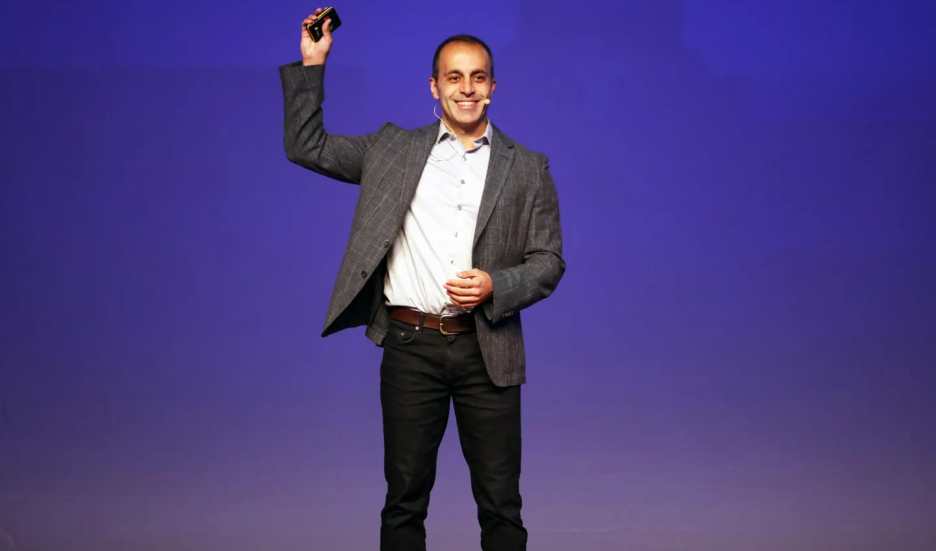
“Today we’re releasing Muse Spark 1.1 — a strong agentic and coding model at a very low price. It’s available through our new Meta Model API and in Meta AI. Muse Spark 1.1 is strongest at agentic performance, tool use, and computer use. It does well on long-running tasks with 1M token context window, can delegate execution to sub-agents running in parallel, and is trained to use computer interfaces on desktop, mobile, or browser,” Meta CEO Mark Zuckerberg said in a post on X.
Muse Spark 1.1 benchmark results against GPT-5.5, Opus 4.8, and Gemini 3.1 Pro
The launch builds on Meta’s broader AI strategy centered on what Zuckerberg has described as “personal superintelligence.” Muse Spark debuted in April as the inaugural text-and-reasoning model developed by Meta’s Superintelligence team, a group assembled last year to narrow the gap with leading AI labs.
A major part of Thursday’s announcement is the Meta Model API. The interface allows developers to connect their software directly to Muse Spark 1.1, making it easier to build AI-powered products without training or hosting a foundation model. Meta is offering new developers $20 in free credits to test the service before switching to pay-as-you-go billing.
“Our focus is on delivering strong agentic and multimodal models at very low cost,” Zuckerberg said in another post on X.
Meta’s pricing puts Muse Spark 1.1 between low-cost and premium competitors. The company charges $1.25 per million input tokens and $4.25 per million output tokens. That is higher than OpenAI’s GPT-5 mini and Anthropic’s Claude Haiku 4.5, though it remains below Anthropic’s higher-end Claude Sonnet 4.6.
Industry analysts see the release as more than another model update. It represents Meta’s latest attempt to build a sustainable business around AI infrastructure, following tens of billions of dollars spent on chips, research, and data centers.
“If Muse Spark 1.1 is genuinely competitive with Claude and Codex on coding, then Meta may finally have a much clearer monetization bridge from AI models to paid developer tools,” said Shay Boloor, chief market strategist at Futurum Equities, according to Reuters.
Muse Spark 1.1 is available in Thinking mode through the Meta AI app and on the web. Meta plans to use the model across its ecosystem, replacing existing Llama models that currently power AI experiences in WhatsApp, Instagram, Facebook, and the company’s smart glasses.
The release arrives two days after Meta expanded its generative AI portfolio with Muse Image, its first image generation model developed by Meta Superintelligence Labs. Taken together, the launches show the company is moving beyond consumer chatbots and building a broader family of AI models aimed at developers, creators, and enterprise customers.