
Circle has cleared a major regulatory hurdle that could reshape its role in digital finance. The company said Friday it received approval from the U.S. Office of the Comptroller of the Currency (OCC) to operate as a national trust bank, giving it direct control over the reserves backing its USDC stablecoin and further advancing its race to build the financial infrastructure for digital assets.
“Circle Internet Group, Inc. (NYSE: CRCL), one of the world’s leading internet financial platform companies, today announced that it has received approval from the U.S. Office of the Comptroller of the Currency (OCC) to establish First National Digital Currency Bank, N.A., a national trust bank. The bank will operate under the name Circle National Trust,” Circle said in a news release Friday.
The announcement sent Circle shares higher, with the stock trading up about 5% after giving back some of its early gains, CNBC reported.
The approval allows Circle to manage reserves for its regulated stablecoins through a new entity called Circle National Trust. USDC, the company’s flagship dollar-backed stablecoin, has more than $73 billion in circulation. Until now, Circle relied on outside banks and custodians to hold the cash and U.S. Treasury assets backing the token.
According to CNBC, the charter does not allow Circle to operate as a commercial bank that accepts deposits or makes loans. Instead, it gives the company a federally regulated trust bank that can safeguard reserves and provide custody services under a national regulatory framework.
Circle: From Stablecoin Issuer to Financial Infrastructure Player
The approval marks a meaningful shift in Circle’s strategy. Stablecoin issuers have spent years building payment products and crypto services. The next phase is about owning more of the financial stack rather than relying on external institutions.
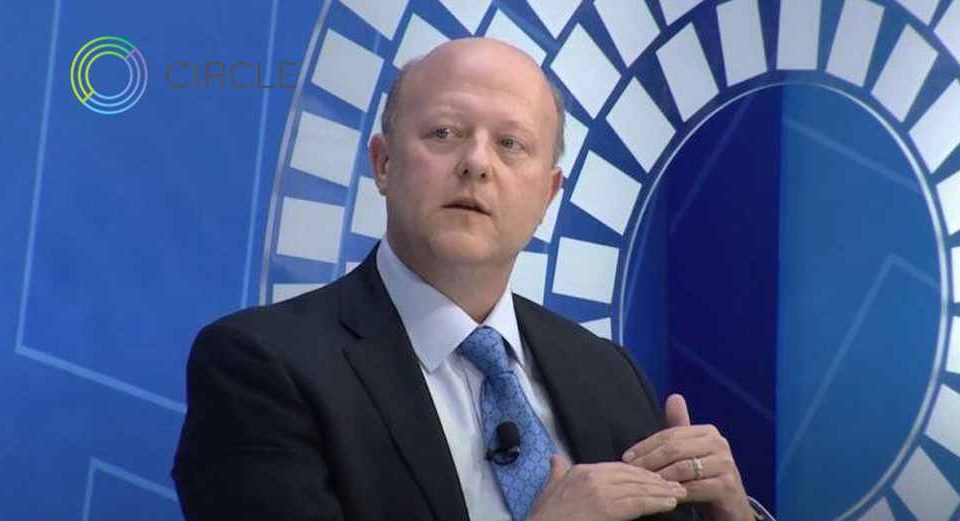
“OCC approval to establish Circle National Trust marks a defining step in bringing blockchain technology and digital assets into the core of the U.S. financial system,” said Jeremy Allaire, Co-Founder, Chairman, and CEO of Circle. “Federal oversight of our trust bank sets a new standard for transparency, governance, and scale for Circle’s infrastructure and unlocks a new phase of adoption, where leading financial institutions can build on public blockchains with clarity and confidence.”
That strategy has become more visible across the crypto industry. Coinbase, BitGo, Fidelity Digital Assets, Ripple, and Paxos have all sought or received similar regulatory approvals as digital asset firms compete for a larger role inside the regulated financial system.
The charter gives Circle another advantage beyond reserve management. Instead of working through a patchwork of state regulations, the company now operates under a national banking regulator. For financial technology companies, that can simplify compliance, lower operational friction, and make it easier to expand regulated services across the United States.
The approval arrives as competition in the stablecoin market intensifies. The GENIUS Act, signed into law last year, established the first federal framework for payment stablecoins and opened the door for banks, payment companies, and financial institutions to issue their own dollar-backed digital currencies.
Founded in 2013, Circle built its business around USDC, one of the largest stablecoins in the market. The company later introduced EURC, a euro-backed stablecoin, and is now repositioning itself for a financial system where issuing digital dollars may no longer be enough.
That transition extends beyond regulation. Just two months ago, Fundpluse reported that Circle raised $222 million for Arc, its blockchain network, at a $3 billion valuation with backing from BlackRock, Apollo, and Andreessen Horowitz. Arc serves as the native blockchain underpinning Circle’s broader infrastructure strategy.
Rather than relying heavily on blockchains such as Ethereum and Solana, Circle wants greater control over the network on which USDC transactions take place. If Arc gains institutional adoption, it could enable payments, tokenized assets, smart contracts, and AI-driven financial applications to run directly on Circle’s infrastructure.
The stakes have grown higher as major financial firms move into stablecoins. Banks and payment companies increasingly see digital dollars as a way to control payment flows, strengthen customer relationships, and build financial services atop programmable money rather than relying on third-party issuers.
Circle’s approval came the same day Swift announced a blockchain consortium involving 17 global banks, including Citi and HSBC, aimed at enabling around-the-clock cross-border payments. The initiative reflects growing pressure on traditional financial networks to compete with blockchain-based payment systems.
The competitive landscape shifted again in June when more than 140 companies, including BlackRock, Coinbase, Mastercard, Stripe, and Visa, joined the Open USD (OUSD) initiative. Unlike traditional stablecoin models, OUSD reserve yields are distributed among participating partners rather than flowing to a single issuer.
Taken together, these developments show that the contest is no longer centered on issuing stablecoins. The larger battle is over who will own the infrastructure that powers digital payments, tokenized assets, and the next generation of financial services. Circle’s trust bank approval puts the company in a stronger position to compete for that future.