The AI market is learning a practical lesson: better models do not remove the need for better data operations. As companies move from prototypes to deployed systems, the bottleneck often shifts to data collection, annotation quality, review workflows, edge-case handling, safety testing, and domain-specific validation.
Adarga AI is building in that gap. The New York-headquartered company has raised a US$2.3 million Seed Round with participation from Y Combinator, Savannah Fund, Microtraction, and 54 Collective. Founded in 2025 and led by CEO Robert Cross, Adarga AI provides AI data services, annotation, model development, deployment, optimization, and consulting for organizations that need AI systems to work in real settings.
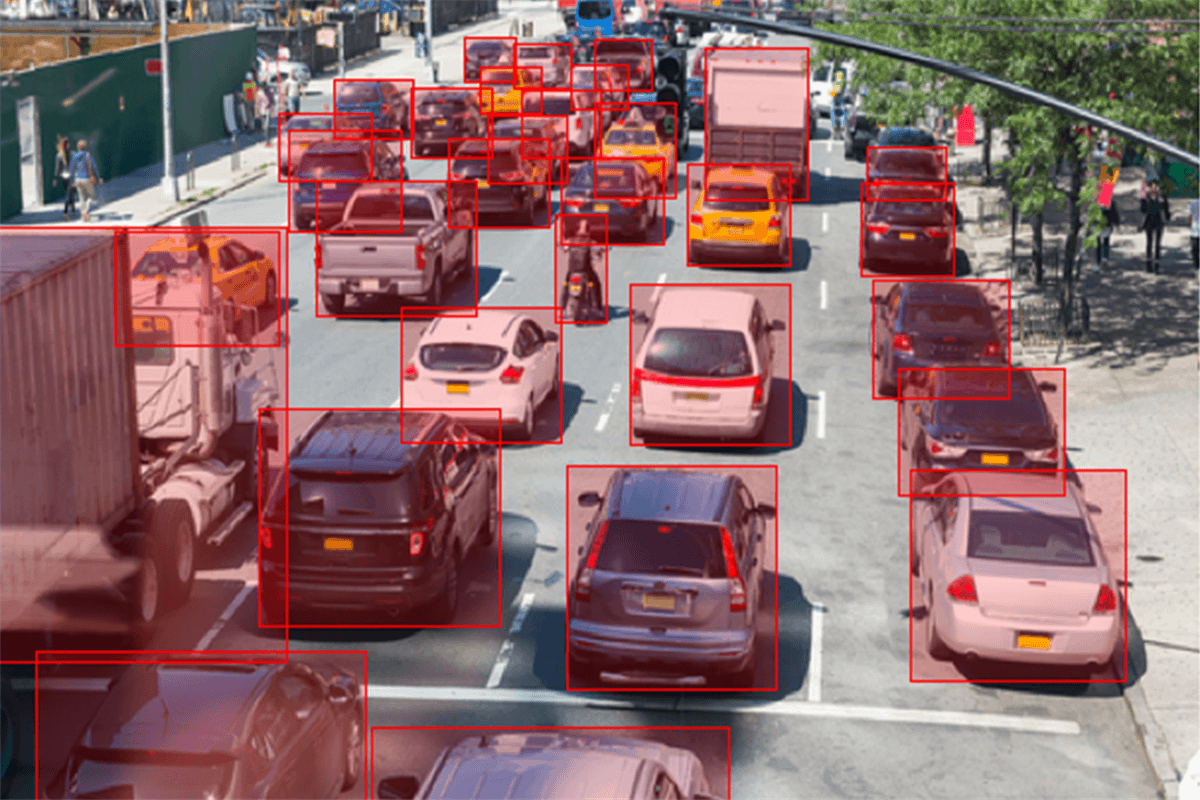
The company's service mix reflects where applied AI projects are becoming more demanding. Adarga AI handles data acquisition, computer vision annotation, natural language annotation, 3D and LiDAR labeling, geospatial mapping, medical imaging, RLHF, human-in-the-loop validation, red teaming, safety alignment, agentic AI, and AI consulting. These are not interchangeable tasks. A medical imaging project needs different review rules from a retail security model; a geospatial dataset raises different quality questions from speech translation; a navigation dataset for complex pedestrian environments requires an unusually careful definition of edge cases.
That detail matters because AI quality is increasingly shaped before training starts and after a model is first deployed. Adarga AI's public materials point to work across road damage detection, drone-based crop and forest monitoring, DICOM medical data, speech transcription, fashion AI, and strawberry harvesting. Case-study summaries reference 250,000 annotated road images, 500,000 police radio communications transcribed, 92%+ accuracy in a fashion AI project, and a 30% improvement in strawberry harvesting accuracy.
The Seed Round will help Adarga AI build more capacity around the operational side of AI: workflow tools for reviewers, specialist domain teams, quality assurance processes, and delivery systems that can support customers across healthcare, agriculture, geospatial intelligence, financial services, retail, autonomous vehicles, and robotics.
The timing is useful for Adarga AI because the market is becoming less tolerant of brittle AI pilots. Buyers increasingly want partners that can help define ground truth, route uncertain cases to reviewers, protect sensitive data, and keep improving a system after the first deployment.
Adarga AI is also turning parts of its applied AI work into products. AdargaGrow supports AI-powered farm management, including tree analytics, crop health assessment, yield estimation, yield optimization, and cost reduction. AdargaSpeech focuses on scalable voice translation with low latency, configurability, and multilingual relevance, including African language use cases described in the company's public materials.
For investors, the round is a bet on the layer of AI that rarely gets the loudest headline but often decides whether a customer succeeds: the data and review system underneath production deployment. For Adarga AI, the capital gives the company room to scale that layer with more structure and more specialization.