If 2025 was the year AI proved it could work, early 2026 is the moment investors decided it must scale. Over the past several weeks, venture capital activity has shifted decisively away from lightweight experimentation and toward execution at industrial scale. The focus is no longer on novelty software layers, but on systems that move vehicles, manufacture goods, generate energy, and operate in the physical world.
That concentration of capital is not happening in a vacuum. According to reports from KPMG and Qubit Capital, global startup deal activity has shifted toward fewer, larger, and more selective transactions. In early 2025, global venture capital investment reached $56.7 billion across 3,765 deals, with funding increasingly flowing to AI and fintech leaders. Fintech investment alone jumped 27% year over year to $51.8 billion, while startup M&A rebounded sharply, with 918 acquisitions in the first half of 2025, representing a 13% increase in deal volume and a 155% surge in total disclosed value.
Deal volume remains well below the speculative highs of 2021. Yet capital concentration has reached a new extreme. A small group of category leaders is absorbing unprecedented checks, while early-stage funding stays tight across most markets.
No round captures this moment more clearly than Waymo’s recent $16 billion financing. The raise underscores a broader reality: autonomy, infrastructure, and physical AI are no longer research programs. They are capital-intensive rollouts.
Top 10 Startup Funding Rounds of Early 2026 (Updated Feb. 11)
Rank Company Amount Sector The Big Idea 1 Waymo $16.0B Autonomous Driving Scaling a global robotaxi network 2 Anthropic $10.0B Generative AI Expanding enterprise-grade agentic systems 3 xAI $3.4B AI Infrastructure Building sovereign-scale AI compute 4 Skild AI $1.4B Physical AI Developing a general-purpose robot brain 5 Cerebras Systems $1.0B AI Processors Wafer-scale chips for frontier training 6 Waabi $750M Autonomous Trucking AI-led freight and logistics 7 ElevenLabs $500M AI Audio Synthetic voice for global media 8 Etched $500M AI Hardware Transformer-optimized silicon 9 Parloa $350M Enterprise AI Automating customer service at scale 10 Runway $315M Video & World Models Simulation for media and roboticsFigures reflect announced rounds, disclosed commitments, and reported financings as of Feb. 11, 2026.
Key Forces Behind the 2026 Capital Surge
1. Physical AI Moves to the Center
Nearly half of the top ten rounds involve companies operating at the intersection of software, hardware, and real-world systems. The investment thesis has shifted toward AI that understands causality, motion, and constraint rather than text alone.
2. Infrastructure Becomes the Bottleneck
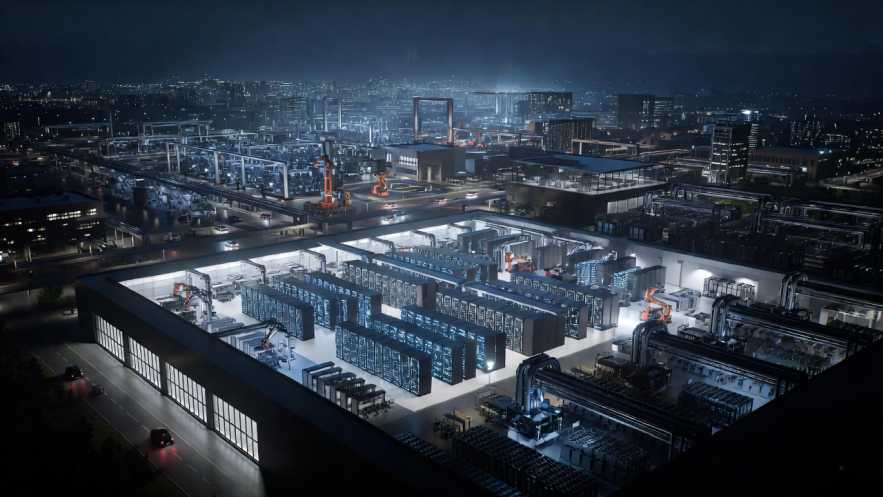
With multi-billion-dollar raises flowing to xAI, Cerebras, and Etched, the constraint facing AI builders is no longer talent or algorithms. It is access to compute, energy, and specialized silicon. Capital intensity has become a competitive moat.
3. A Clear Flight to Category Leaders
Early-stage funding remains selective, but market leaders are being funded aggressively. Investors appear less interested in diversification and more focused on backing the most defensible platforms in each sub-sector.
Detailed Breakdown: February 2026’s Largest Rounds
Rank Company Amount Key Investors Valuation / Context 1 Waymo $16.0B Dragoneer, DST Global, Sequoia, Alphabet ~$126B valuation. Funding supports expansion into 20+ global cities 2 Anthropic $10.0B GIC, Coatue, Microsoft, NVIDIA ~$350B valuation. Financing next-generation agentic systems 3 xAI $3.4B Apollo Global Management, Valor Equity Structured financing tied to large-scale GPU leasing 4 Skild AI $1.4B SoftBank, NVentures, Jeff Bezos ~$14B valuation. Developing a licensable robot intelligence layer 5 Cerebras $1.0B Tiger Global, Benchmark, AMD ~$23B valuation. Wafer-scale training systems 6 Waabi $750M Khosla Ventures, G2, Uber Series C. Expansion of autonomous freight deployments 7 ElevenLabs $500M Sequoia, a16z, ICONIQ ~$11B valuation. Shift toward enterprise conversational audio 8 Etched $500M Peter Thiel, Stripes ~$5B valuation. Transformer-specific hardware architecture 9 Parloa $350M General Catalyst, EQT ~$3B valuation. Agent-driven customer experience 10 Runway $315M General Atlantic, NVIDIA, Google ~$5.3B valuation. World-model simulation platformsValuations and deployment plans reflect a mix of disclosed figures and market analysis.
Investor Briefings: Strategic Value vs. Risk
The 2026 IPO Watch
Market participants increasingly describe 2026 as the year of the “hectocorn” public listing. Three companies stand out:
Databricks
Likelihood: Very High | Window: Q3 2026
With nearly $5 billion in revenue and strong growth, Databricks appears structurally ready for public markets.
Stripe
Likelihood: High | Window: Q4 2026
As AI agents increasingly transact autonomously, Stripe’s role as the payments layer positions it for renewed momentum.
SpaceX
Likelihood: Moderate | Window: Late 2026
Starlink’s cash flow has reopened IPO discussions, though timing remains sensitive to global conditions.
IPO timing and valuations remain subject to market conditions.
Looking Ahead
The scale of these early-2026 rounds suggests many companies are entering what may be their final private funding cycle before public markets reopen. Capital is no longer being allocated to ideas alone. It is being deployed to build fleets, factories, and infrastructure that must perform in the real world.
As Q1 continues, the defining question is no longer whether AI can execute, but which companies can afford to do so at scale.