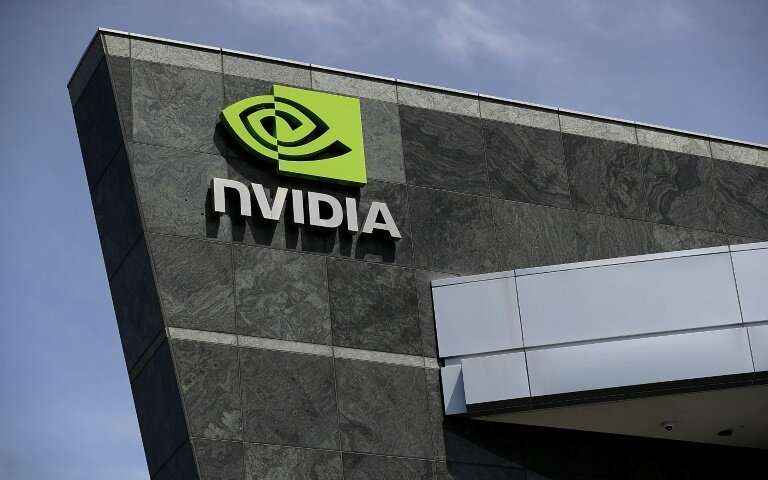
Nvidia said Monday it has acquired SchedMD, the company behind Slurm, a widely used open-source system for managing large computing jobs. The deal signals Nvidia’s growing focus on software as it works to cement its role at the center of the AI computing stack, even as competition intensifies across chips, models, and infrastructure.
Nvidia built its name on fast, high-end chips that dominate AI training and inference. Software has quietly become just as central to that dominance. CUDA, Nvidia’s proprietary programming platform, remains a major reason developers stick with Nvidia hardware. At the same time, the company has spent years releasing its own AI models as open source, covering areas such as physics simulation and autonomous driving. The strategy gives researchers and companies tools they can use freely, then ties those tools closely to Nvidia’s hardware.
SchedMD fits neatly into that playbook. The company develops Slurm, software that schedules and manages massive computing workloads across data centers. These jobs often consume large portions of a cluster’s capacity, making efficient coordination critical for AI training and large-scale research. Slurm is open-source and available at no cost, with SchedMD generating revenue from support, engineering, and maintenance services.
Nvidia said it plans to keep Slurm open source after the acquisition. “Slurm, which is supported on the latest Nvidia hardware, is also part of the critical infrastructure needed for generative AI, used by foundation model developers and AI builders to manage model training and inference needs,” the company said in a statement. Financial terms were not disclosed.
The timing matters. Earlier the same day, Nvidia introduced a new family of open-source AI models it claims are faster, cheaper, and wiser than earlier releases. The move comes as open-source models from Chinese AI labs gain traction, putting pressure on U.S. companies that once led the field without much challenge.
SchedMD was founded in 2010 by Morris “Moe” Jette and Danny Auble, the original developers of Slurm. Based in Livermore, California, the company employs about 40 people. Its customers include cloud infrastructure provider CoreWeave, the Barcelona Supercomputing Center, and research labs and enterprises that operate some of the world’s largest computing systems.
“We’re thrilled to join forces with NVIDIA, as this acquisition is the ultimate validation of Slurm’s critical role in the world’s most demanding HPC and AI environments,” said Danny Auble, CEO of SchedMD. “NVIDIA’s deep expertise and investment in accelerated computing will enhance the development of Slurm — which will continue to be open source — to meet the demands of the next generation of AI and supercomputing.”
Slurm already plays a major role in high-performance computing. It is used by more than half of the top 10 and top 100 systems on the TOP500 list of supercomputers. As AI workloads grow larger and more demanding, the software that decides which jobs run, where they run, and how resources are shared becomes just as important as the chips doing the math.
For Nvidia, the SchedMD acquisition reinforces a clear message. The company no longer wants to be seen only as a chip supplier. It aims to own the infrastructure layer that researchers, startups, and enterprises rely on to build and scale AI systems, with open-source software serving as the glue that keeps developers within Nvidia’s ecosystem.