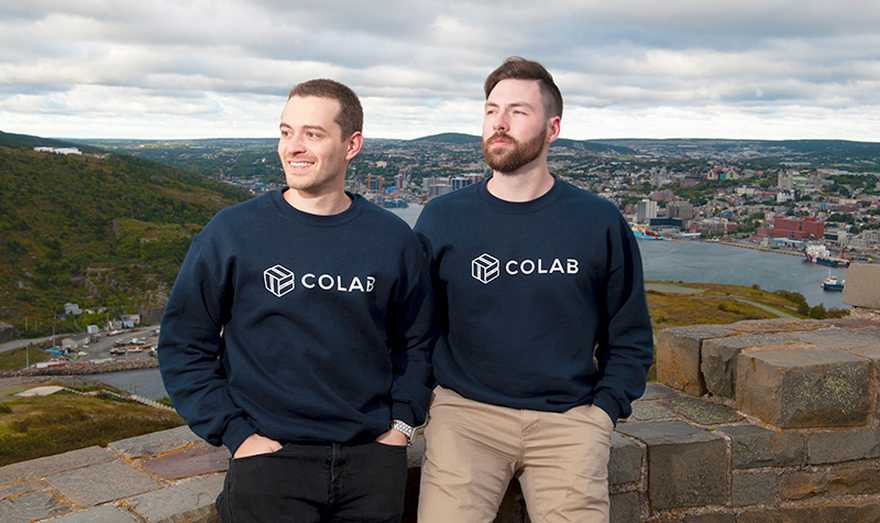
Engineering is entering a new phase—and it’s being rewritten by AI. For years, mechanical and hardware design teams have relied on tedious design reviews, endless meetings, and slow iteration cycles. Now, a St. John’s, Canada-based AI startup CoLab is convincing the industry that those days are numbered.
Today, CoLab announced it has raised $72 million in Series C funding to push its vision of an AI-powered engineering future. The round was led by Intrepid Growth Partners, with continued backing from Insight Partners, Y Combinator, Pelorus VC, Killick Capital, and Spider Capital. The raise follows the breakout success of AutoReview, CoLab’s first AI agent, which has already drawn a waitlist of more than 47,000 engineers eager to use it.
The company says AutoReview is just the beginning. Its platform, called EngineeringOS, connects people, design data, and AI to help teams make decisions faster and with greater precision. For customers like Ford, Lockheed Martin, GE Appliances, Johnson Controls, and Schneider Electric, the promise is simple: compress design cycles that once took months into hours and bring products to market years sooner.
“Behind every feat of engineering, there’s thousands of design decisions. And the most critical decisions in industry still happen slowly — in 20-person meetings, weeks apart,” CoLab’s co-founder and CEO Adam Keating said in a blog post. “CoLab is changing that. We envision a world where skilled engineers collaborate with AI agents that can access their entire company’s collective knowledge, collapsing design cycles from months to hours.”
From Ford to Lockheed: AI Startup CoLab Raises $72M to Power the AI Future of Engineering
That vision is quickly gaining traction. According to Keating, some customers are already “making 7-figure bets” on CoLab’s AI roadmap. Executive teams are now part of the conversation, not just engineering leads. “Many are already making 7-figure bets with CoLab. It’s clear AI isn’t just an interesting experiment anymore – it’s a competitive advantage in their top-down strategy,” Keating adds.
The company’s new investor, Mark Shulgan, co-founder and partner at Intrepid Growth Partners, calls CoLab the “decision-making layer” that connects human expertise with AI and engineering data. “The company is building the decision-making layer that connects people, data, and AI so teams can apply their expertise faster and more effectively than ever before.”
CoLab’s momentum stems from nearly a decade of groundwork. Since 2017, its platform has helped global engineering teams complete virtual design reviews, storing millions of expert annotations on 2D and 3D files. While traditional software can tell engineers what changed between versions, CoLab’s system understands why. This historical context gives its AI agents the ability to suggest design improvements and catch errors that humans might overlook.
“Every design decision leaves behind context: the discussions, trade-offs, and rationale that explain why a product is designed a certain way,” says Jeremy Andrews, CoLab’s co-founder and CTO. “What we’ve learned is that capturing that knowledge is a user-experience problem. Engineers will only share what they know if the process feels natural and valuable – and that’s the breakthrough CoLab has made.”
That breakthrough couldn’t come at a better time. As experienced engineers retire, decades of expertise risk disappearing. The share of manufacturing employees over 55 has more than doubled in the past thirty years, according to the U.S. Bureau of Labor Statistics. “North America and Europe have led the way in advanced design and manufacturing for decades – but the rest of the world is catching up. We risk losing even more ground if we don’t capture and scale our engineering knowledge now,” says Josh Fredberg, Managing Director at Insight Partners and a former executive at PTC and Ansys.
AutoReview, CoLab’s first AI peer checker, has already proven the concept. Engineers describe it as “like having a mentor looking over my shoulder,” offering guidance and catching design flaws before they become costly mistakes. The company plans to release more AI agents and announce major partnerships over the next year.
CoLab’s momentum isn’t just about automation—it’s about preserving human judgment while scaling it with AI. As Keating puts it, “AI can accelerate every tool engineers use, but it can’t decide what’s right. That’s where we come in.”
With $72 million in fresh capital and a growing list of blue-chip clients, CoLab is positioning itself as the company defining the next era of engineering—one where human expertise and AI work side by side to design the future, faster.